II Acto
[09] II ACTO
CONCEPTACTOR'S ROLE
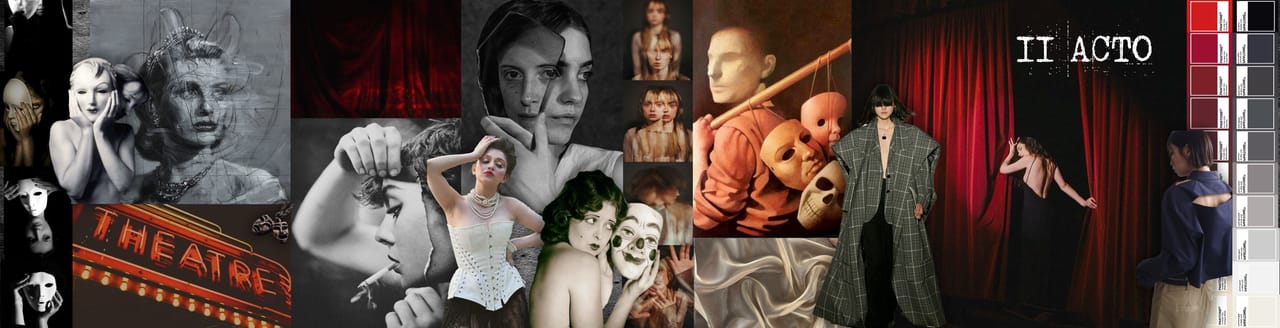
This collection takes the actor as its central figure. In theatre, a person steps onto the stage and leaves behind their own identity to become someone else. Their body, attitude and, above all, their costume work together to construct a new character. The garment is not merely decorative; it becomes a tool through which another identity, story and emotion can be expressed.
This transformation lies at the heart of the collection. Each look is conceived as a theatrical archetype, capable of existing on stage while also representing the different roles and appearances we adopt in everyday life. Volumes, layers and contrasting materials become a visual language through which attitudes, identities and perceptions are explored.
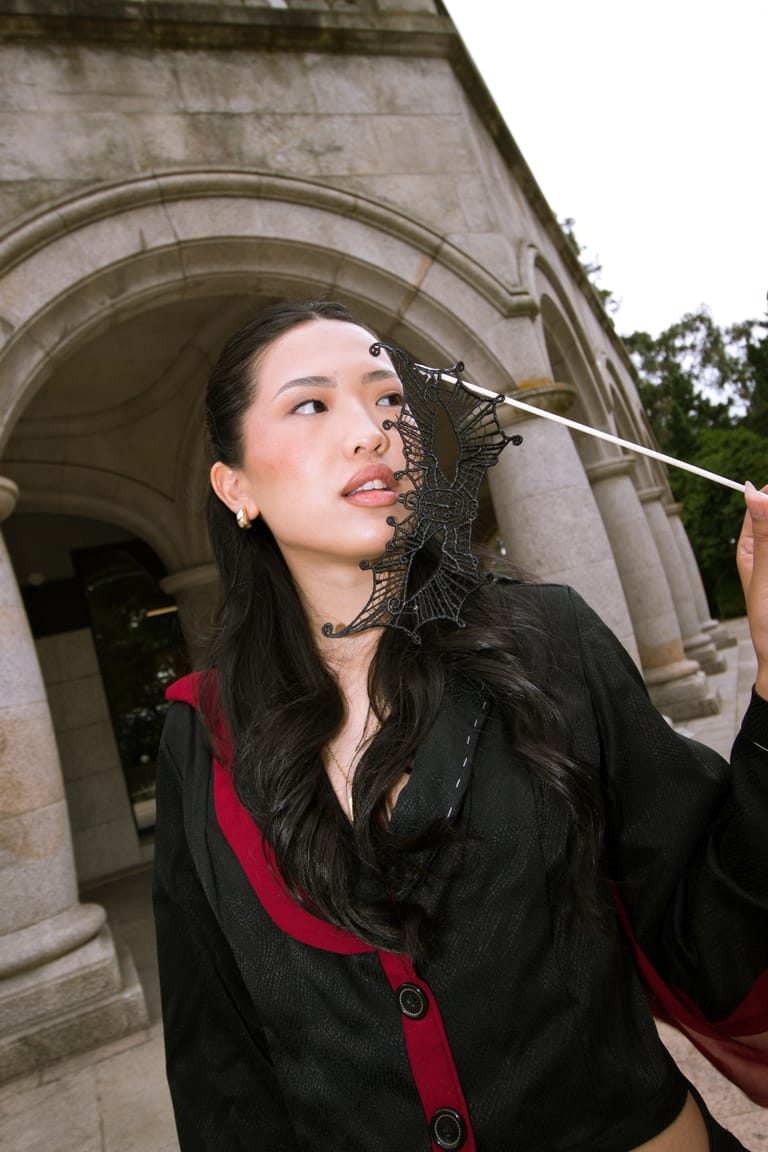
The collection questions how clothing can construct and sustain an identity. As in theatre, the garments become a space for exploring presence, performance and character. Each piece acts as a mask in the form of a garment, revealing the tension between what we choose to show and who we really are.
INTERPRETATIONTHE APPARENT
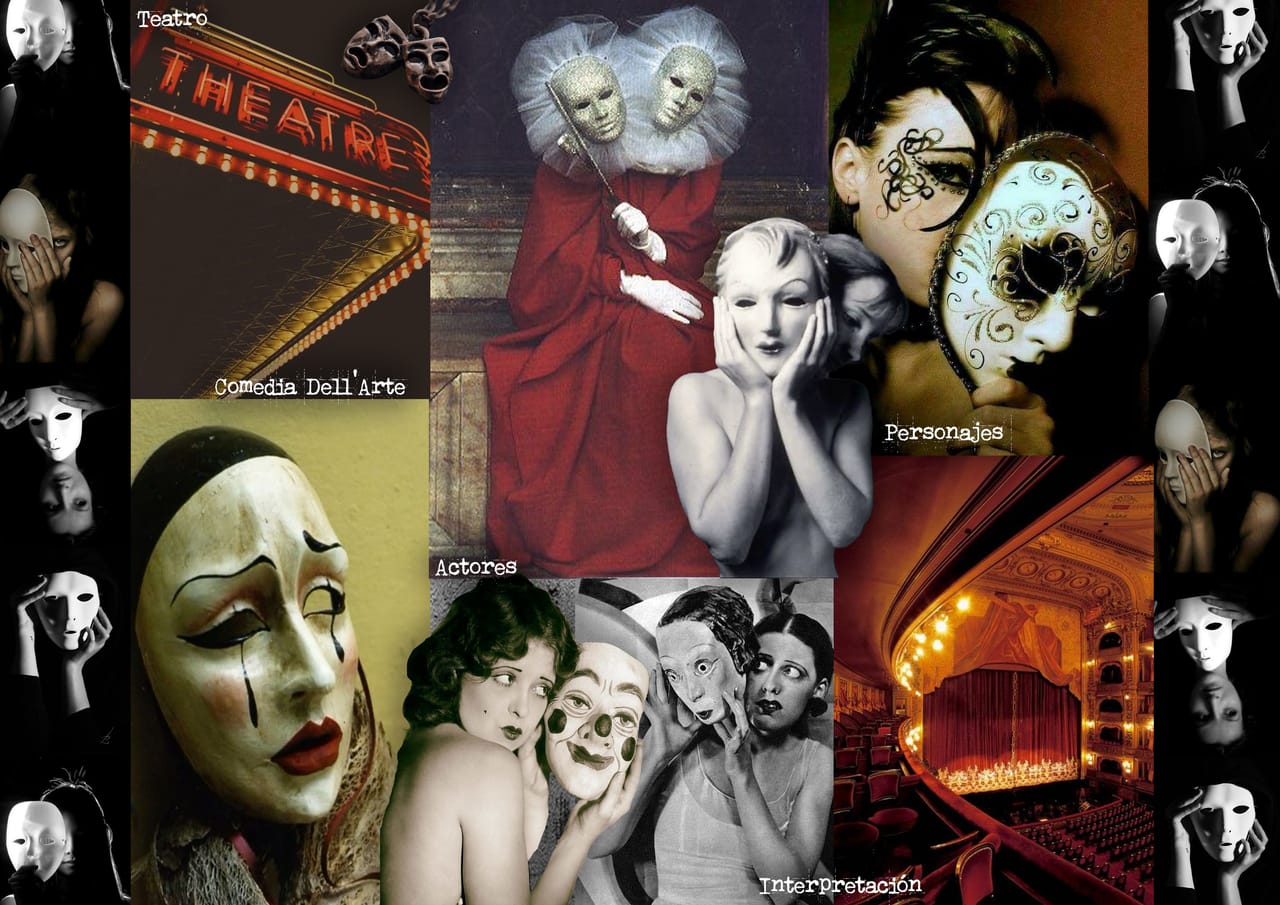
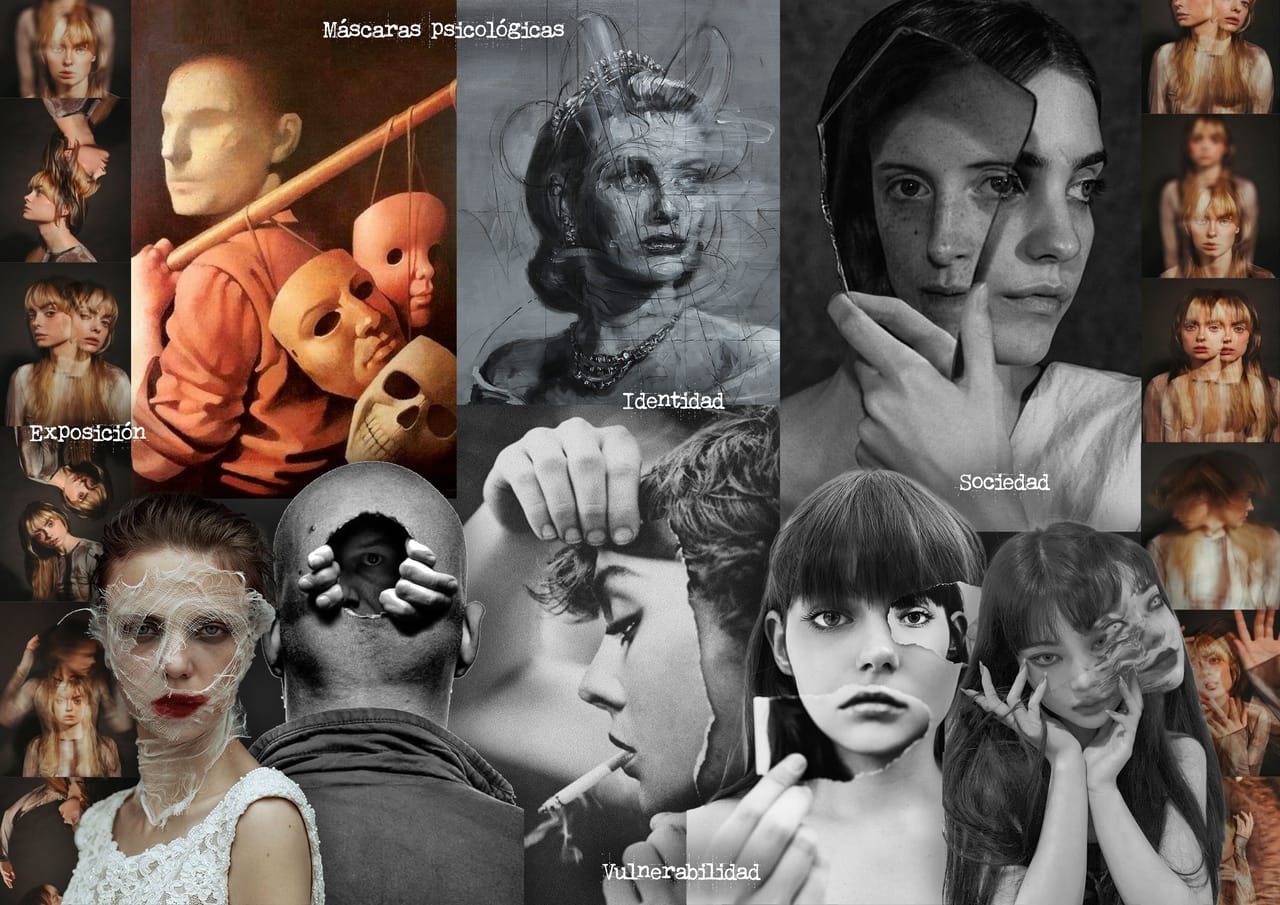
The collection interprets identity as something fluid and constantly performed, translating the idea of theatrical roles into the language of fashion. Each garment becomes a tool for constructing a presence, allowing the wearer to reveal, conceal or transform different aspects of their identity.
The designs explore the contrast between what is perceived and what lies beneath, using volumes, layers, silhouettes and contrasting textures to express different attitudes and emotional states. Each look is conceived as an archetype, giving the garment its own character while allowing the wearer to inhabit it.
Rather than simply recreating theatrical costumes, the collection translates the act of interpretation into contemporary fashion. The garments become masks that do not necessarily hide, but offer another way of seeing and expressing the self — exploring the different identities we construct depending on the role we choose to play.
SILHOUETTE & STRUCTURETYPOLOGIES & SILHOUETTES
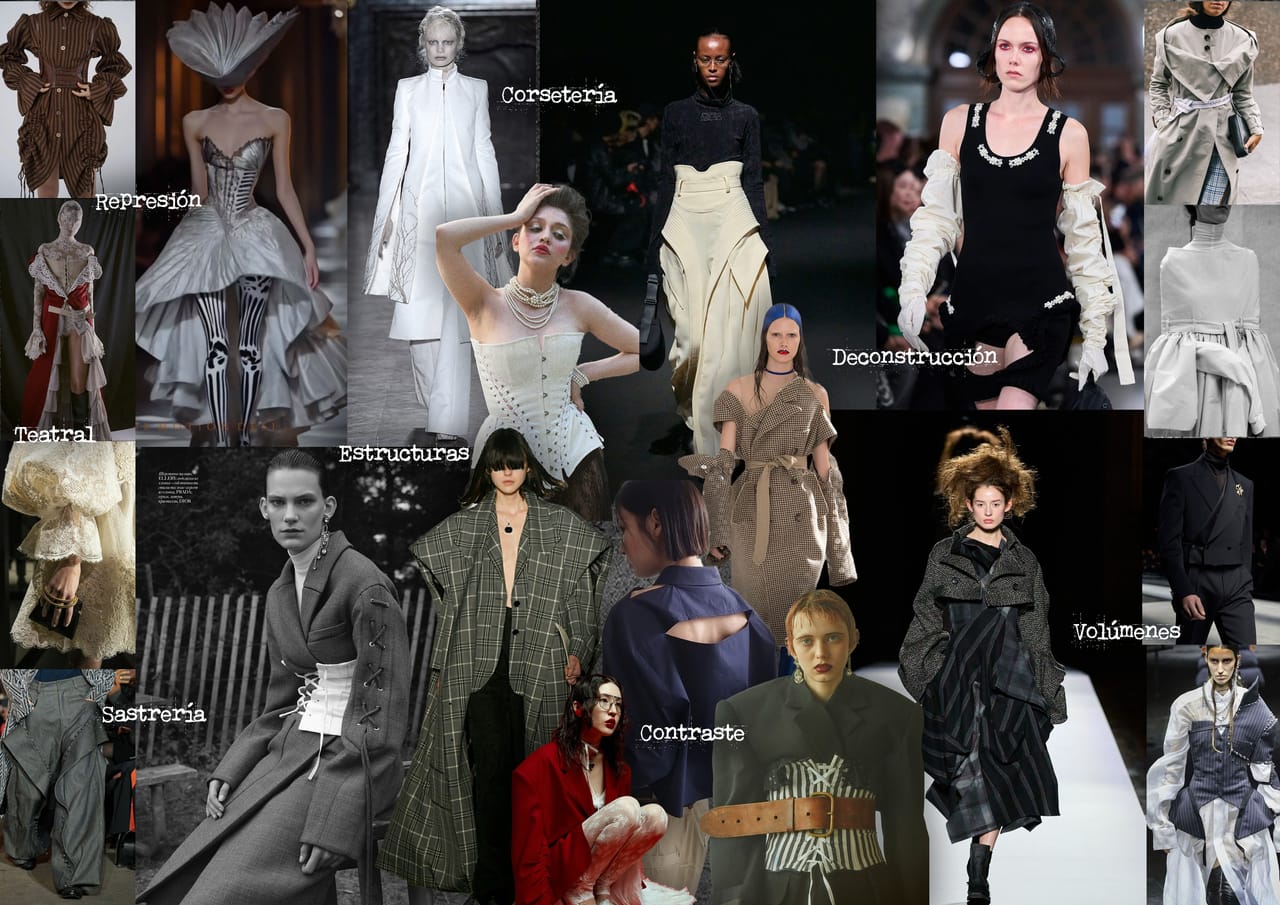
The collection develops its formal research through theatrical costume and its ability to construct identity. Following the idea that, in each scene, the costume defines the character, the garments explore how volumes, cuts and pattern construction can be transformed to suggest different archetypes.
Classic typologies such as corsets, coats, dresses and trousers are reinterpreted through a more experimental approach, where construction becomes a central element. Visible seams, layered structures, exaggerated volumes and adjustable systems act as expressive resources, reinforcing the dramatic character of the designs.
The silhouettes move between rigid and fluid, contained and exaggerated, reflecting the duality of theatre: revealing and concealing, exposing and disguising. The structure of each garment takes on a narrative dimension, as if every piece contained a character of its own.
Traditional typologies are therefore transformed into contemporary, theatrical and sculptural pieces, maintaining a direct connection with the collection’s central concept: fashion as a space for interpretation, performance and appearance.
MATERIAL AS CHARACTERFABRICS & TEXTURES
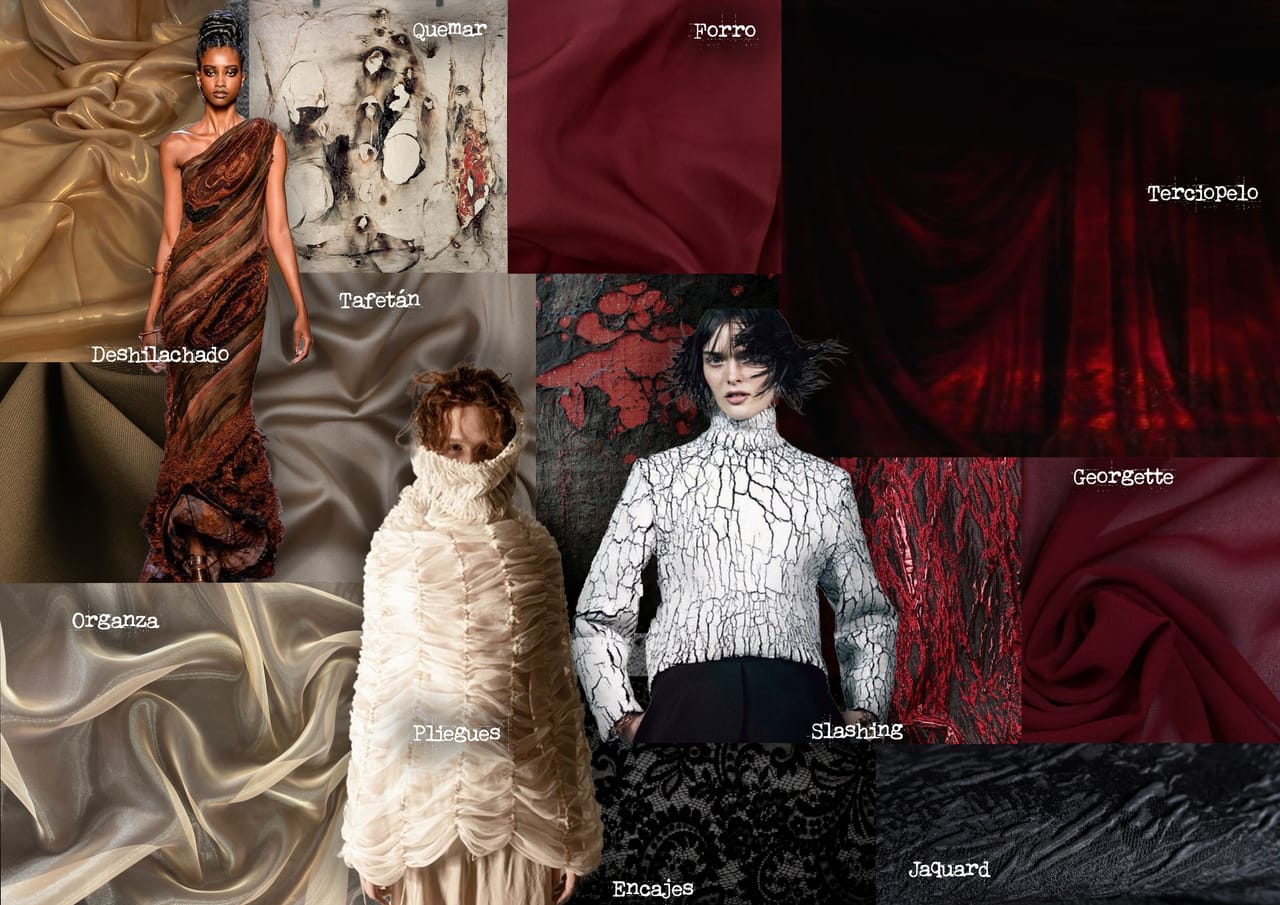
The material selection reflects the theatrical essence of the collection, with each fabric contributing its own presence, emotion and function. Velvet adds depth and authority, while organza, gauze and georgette introduce lightness, transparency and movement.
Jacquard and taffeta enhance the dramatic character through structure and volume, while gabardine and twill provide stability and precision. Lace adds a more delicate and intimate quality, creating contrast between strength and fragility.
The fabrics therefore become more than aesthetic choices: they help construct each silhouette, attitude and character. Just as in theatre, the costume does not simply dress — it performs.
II ACTO
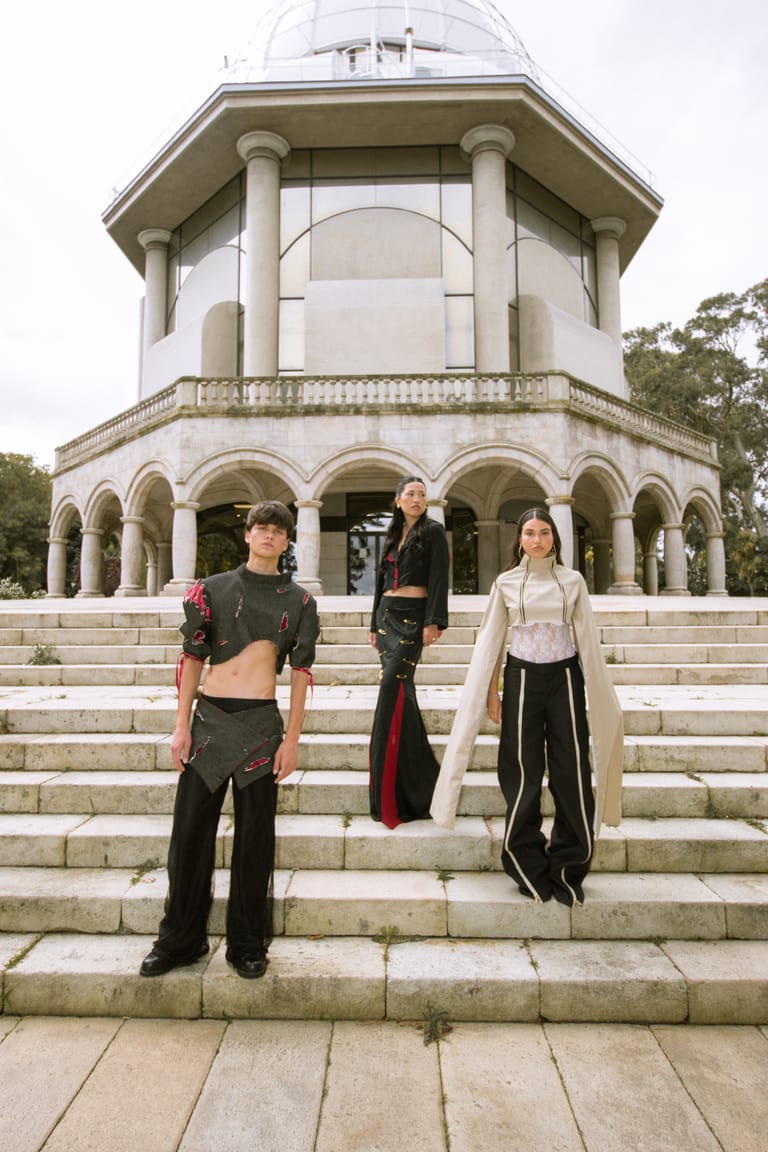
II Acto explores the duality between what is shown and what lies beneath. Inspired by theatre, where an actor adopts different identities under the spotlight, the collection translates this interplay of masks and appearances into contemporary fashion. The title refers to the moment in a play when conflict and truth begin to emerge, mirroring the moment when a carefully constructed facade starts to wear away.
The garments act as characters: some contain, others release, while others reveal what would normally remain hidden. Dramatic volumes coexist with delicate transparencies, while rigid structures, fluid draping and layered constructions explore the tension between the visible and the intimate.
The fabrics reinforce this narrative. Velvet, jacquard and taffeta evoke classical theatre and the solemnity of the curtain, while organza, georgette, gauze and lace introduce vulnerability and emotional transparency. Twill and gabardine provide structure, acting as a facade or armour, while visible linings reveal the character’s inner world.
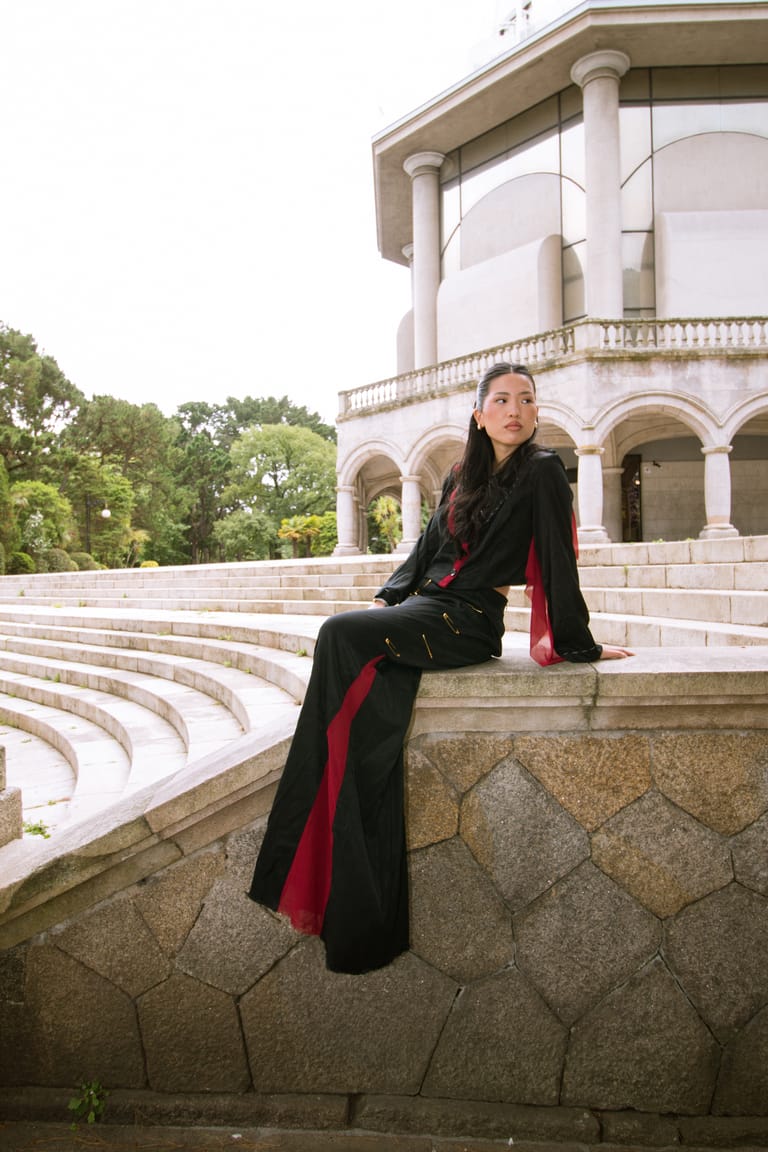
The colour palette draws from the theatre itself: deep burgundy, intense black, muted gold and shadowed neutrals. An intimate, dramatic and warm palette designed to create presence.
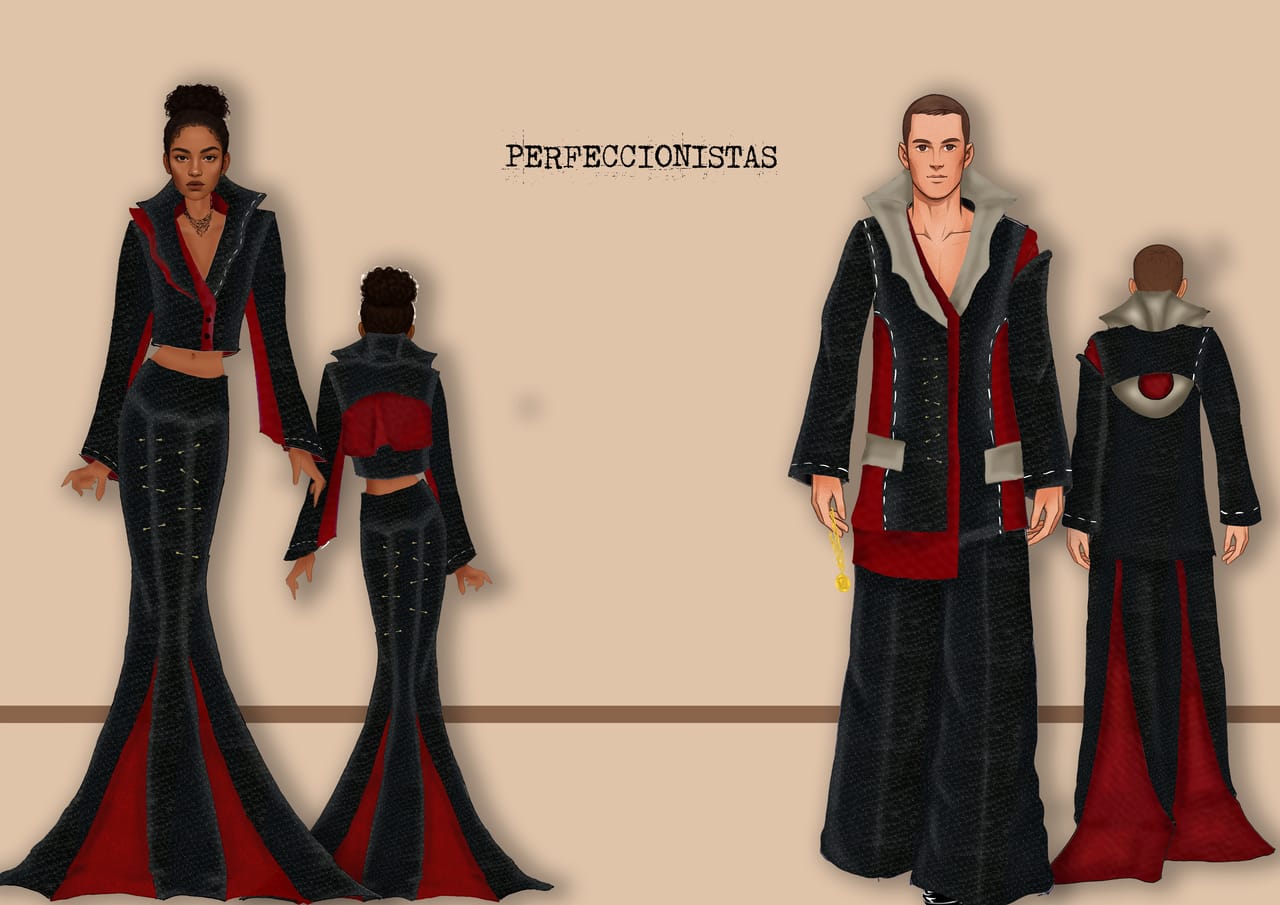
THE PERFECTIONISTSROLE 01
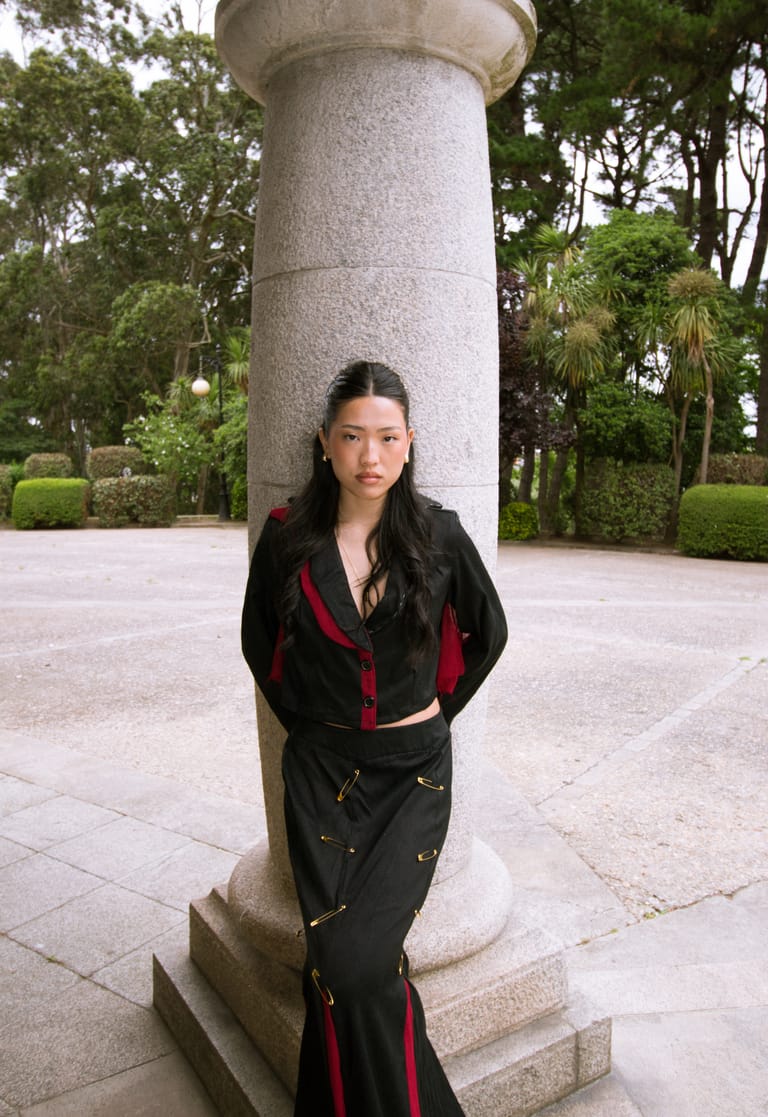
This character is obsessed with aesthetic perfection. They measure, organize and refine, controlling every seam and detail. Symmetry becomes a way of breathing, yet this rigidity ultimately becomes a prison, constricting the body from within. The immaculate mask barely holds together the human being beneath it.
The garments convey superiority, discipline and technical control through straight buttoning, precise proportions and elongated silhouettes. However, closer inspection reveals subtle imperfections: exposed linings, basting stitches and displaced tie pins disrupt the initial sense of perfection. Carefully constructed pleats and darts contrast with unexpected openings and slightly misaligned elements, representing the character’s internal fracture beneath an apparently flawless exterior.
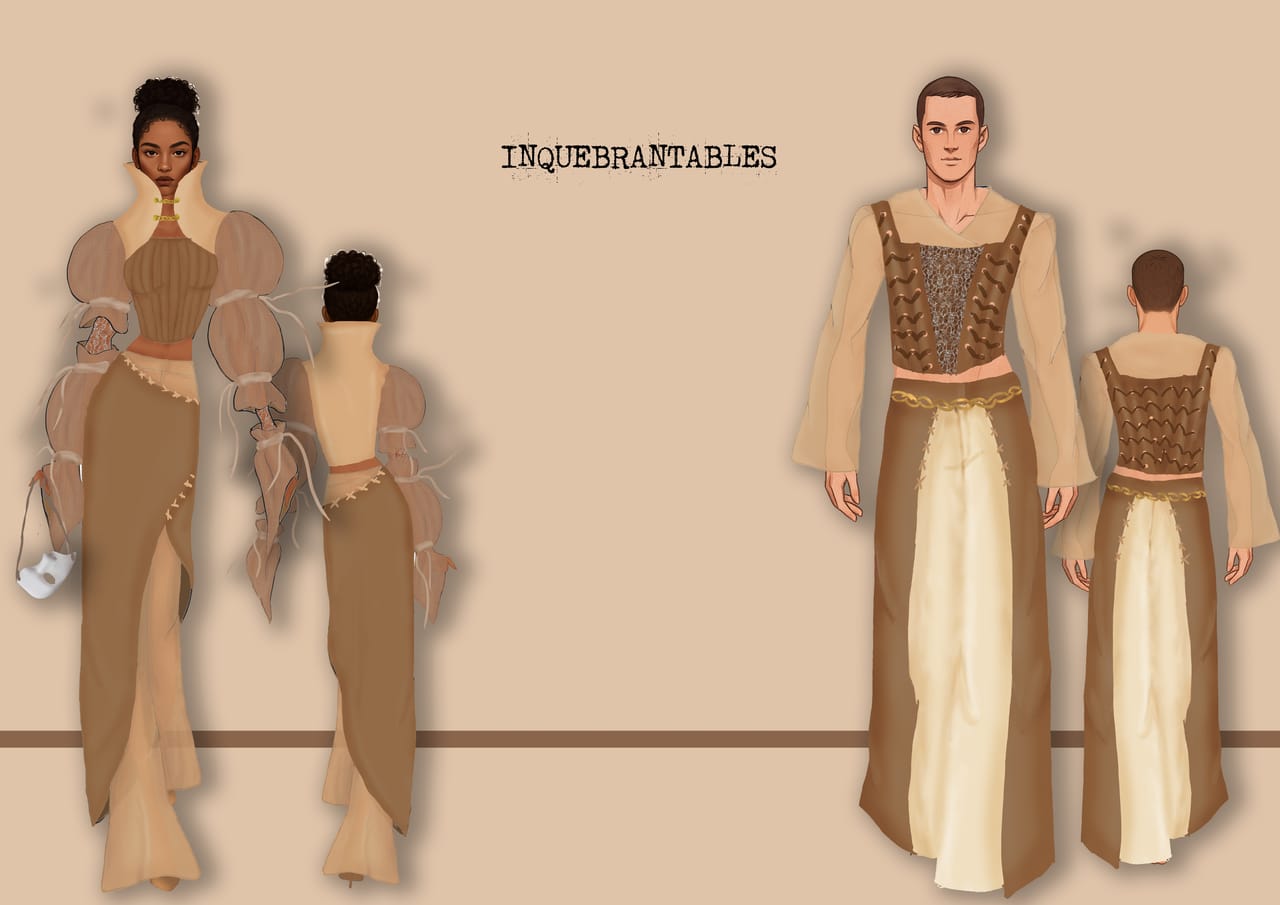
THE UNBREAKABLEROLE 02
This character is built around the need to appear strong, untouchable and unbreakable. Their presence is imposing, almost protective, as if the body itself were turned into armour. Yet beneath this apparent strength lies a more vulnerable side, revealed through the tension between structure and softness.
The garments explore this duality through a contrast of fabrics, volumes and construction. Twill and other structured materials create weight, rigidity and protection, while gauze introduces fluidity, transparency and movement. Corsetry and restrictive forms shape and contain the body, suggesting the effort required to maintain an image of strength. At the same time, flowing sleeves, layered fabrics and softer elements break through this rigid exterior.
The result is a character who appears impenetrable from the outside, but whose fragility remains visible beneath the armour.
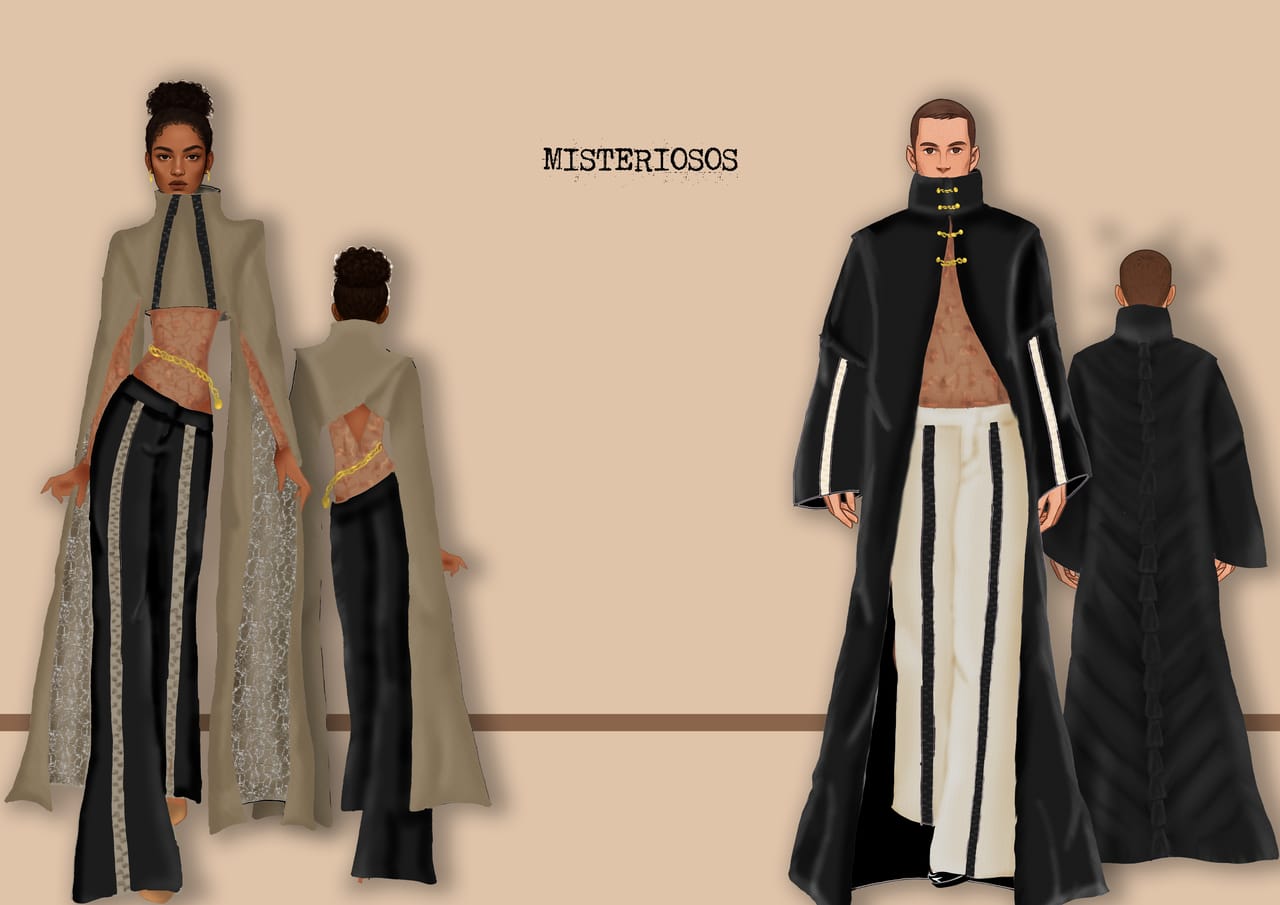
THE MYSTERIOUSROLE 03
This character does not protect themselves through strength, but through distance. Elegance becomes an emotional barrier, a sophisticated form of self-preservation. Vulnerability exists beneath the surface, but it is only revealed through movement, and only when the character chooses to reveal it.
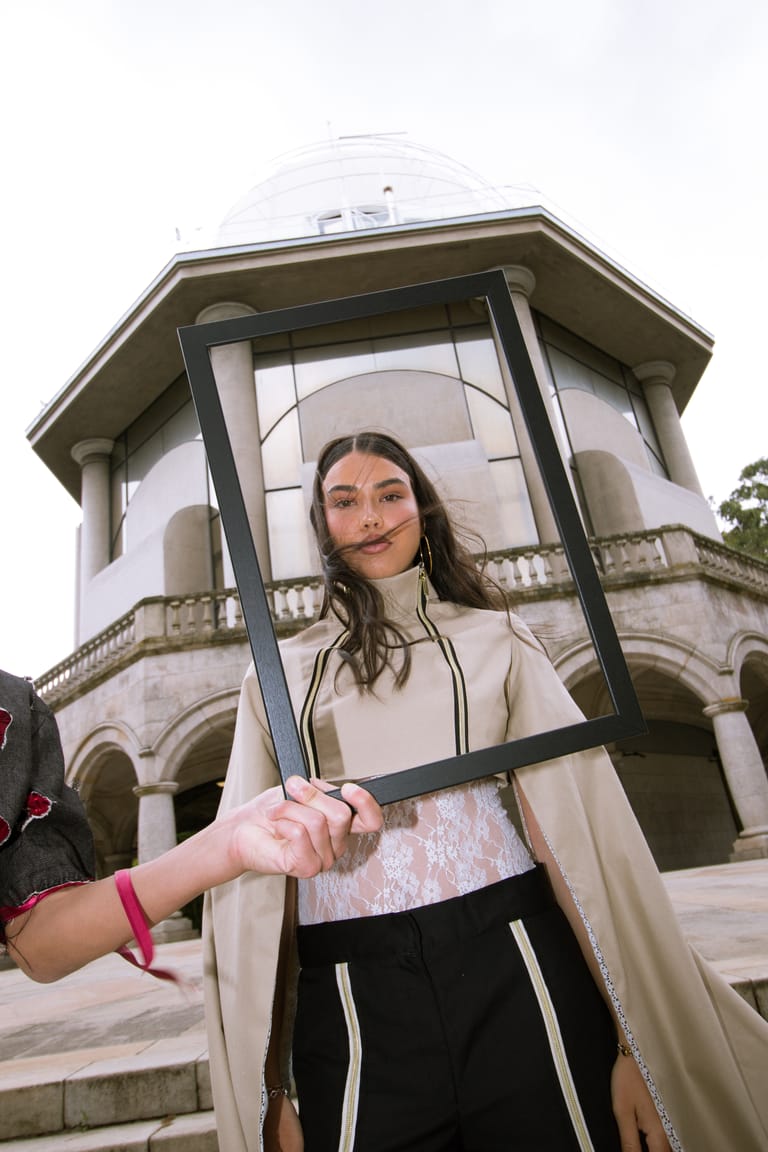
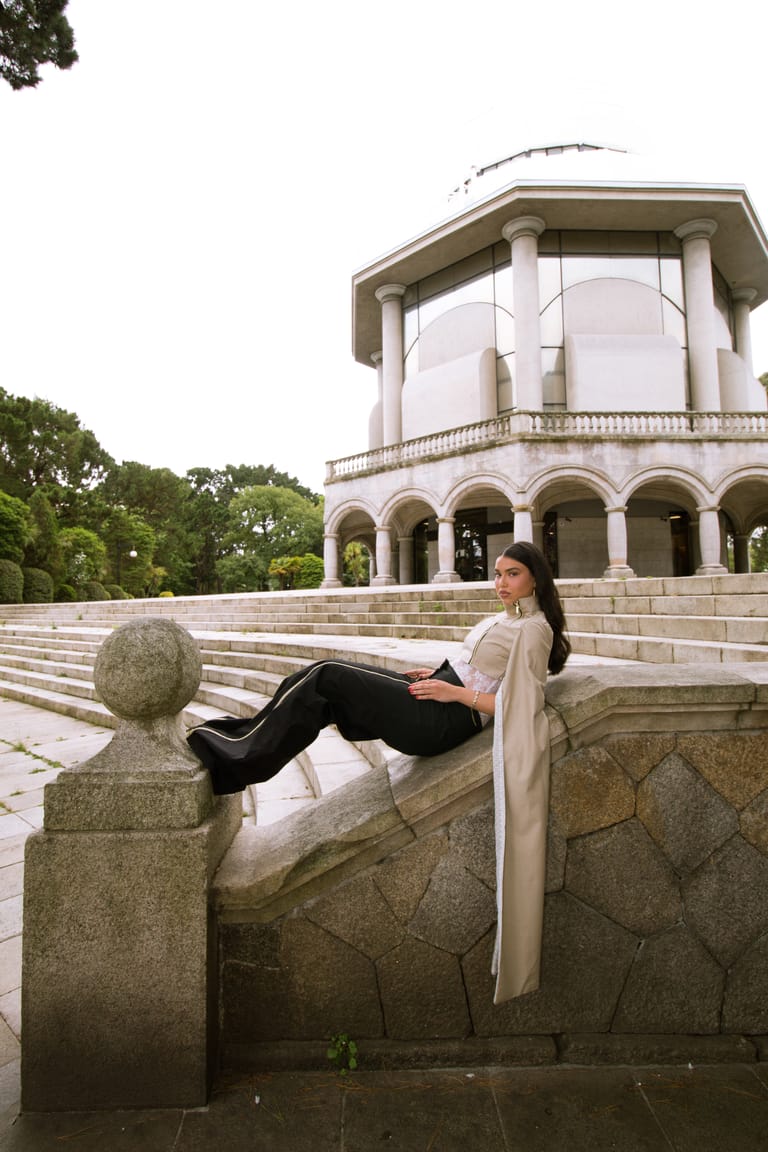
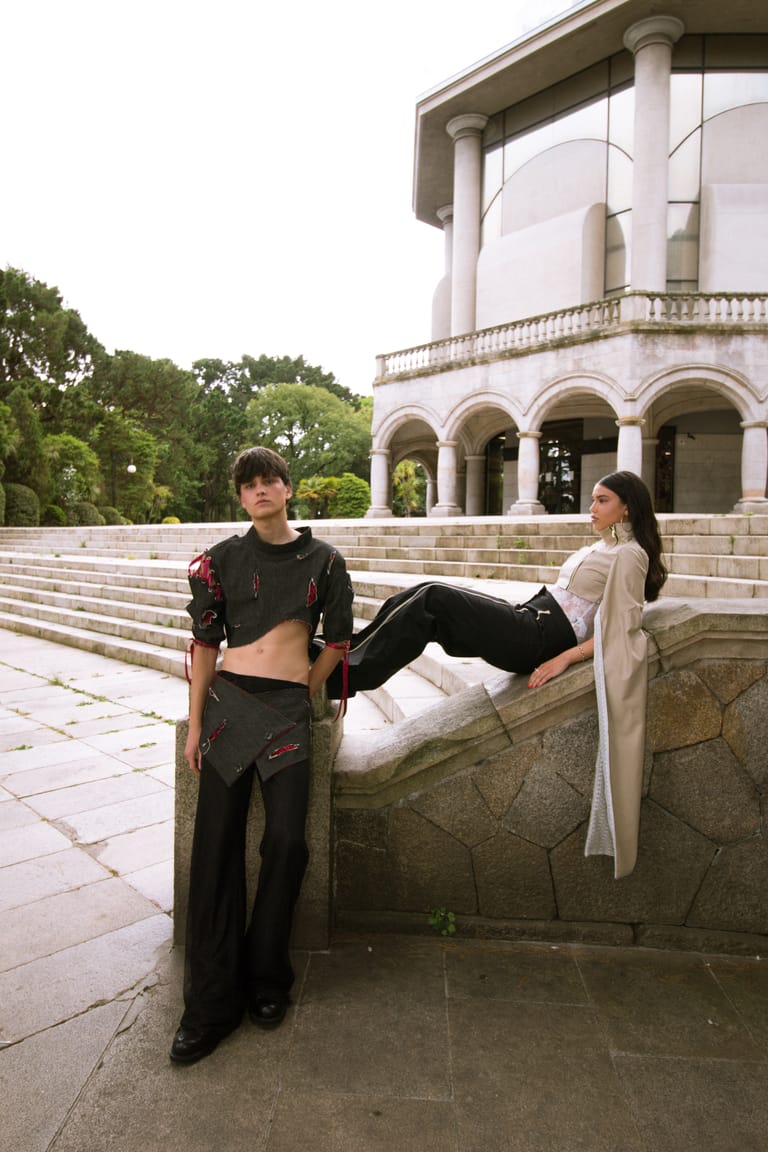
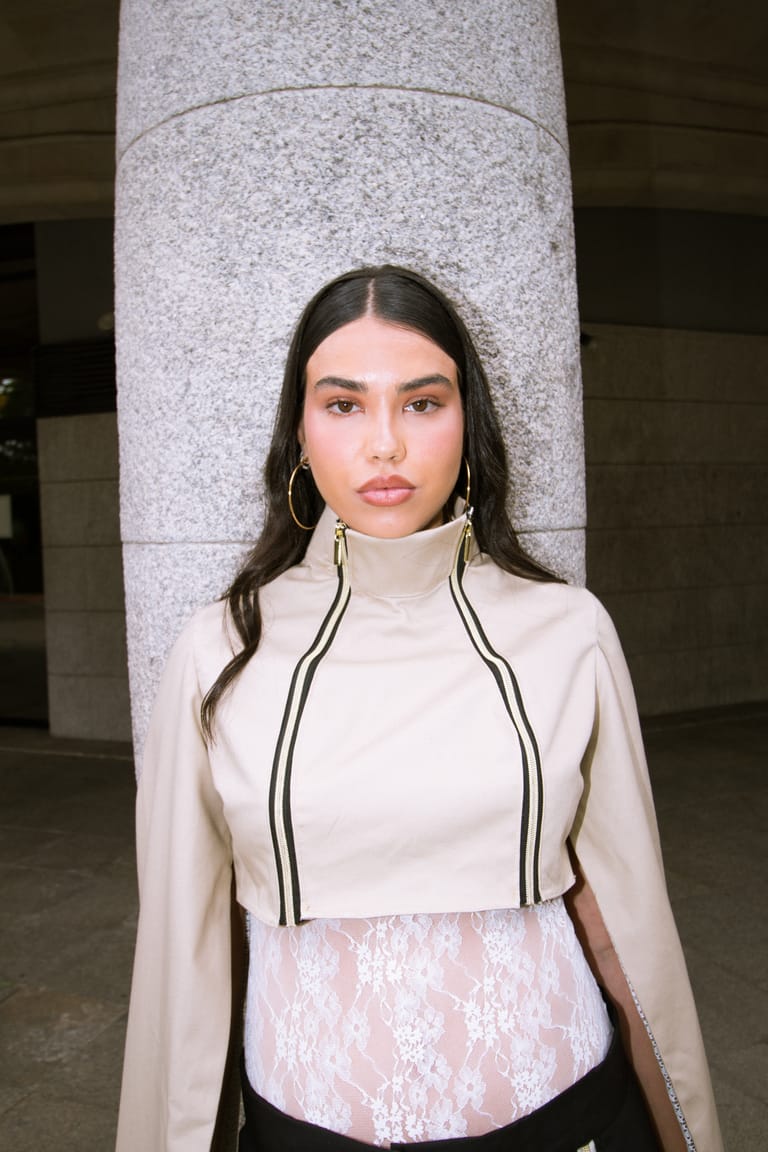
The central garment is a rigid, architectural cape that envelops the body like armour, creating a sense of protection and emotional distance. Its interior, however, reveals embroidery and subtle shine, suggesting that what is most intimate remains hidden within. Long drapes, clean lines and vertical silhouettes reinforce this sense of separation.
Controlled openings and side slits allow glimpses of the body as the character moves, creating a tension between concealment and revelation. Refined and seemingly inaccessible, this character uses elegance not simply as an aesthetic choice, but as a carefully constructed defence.
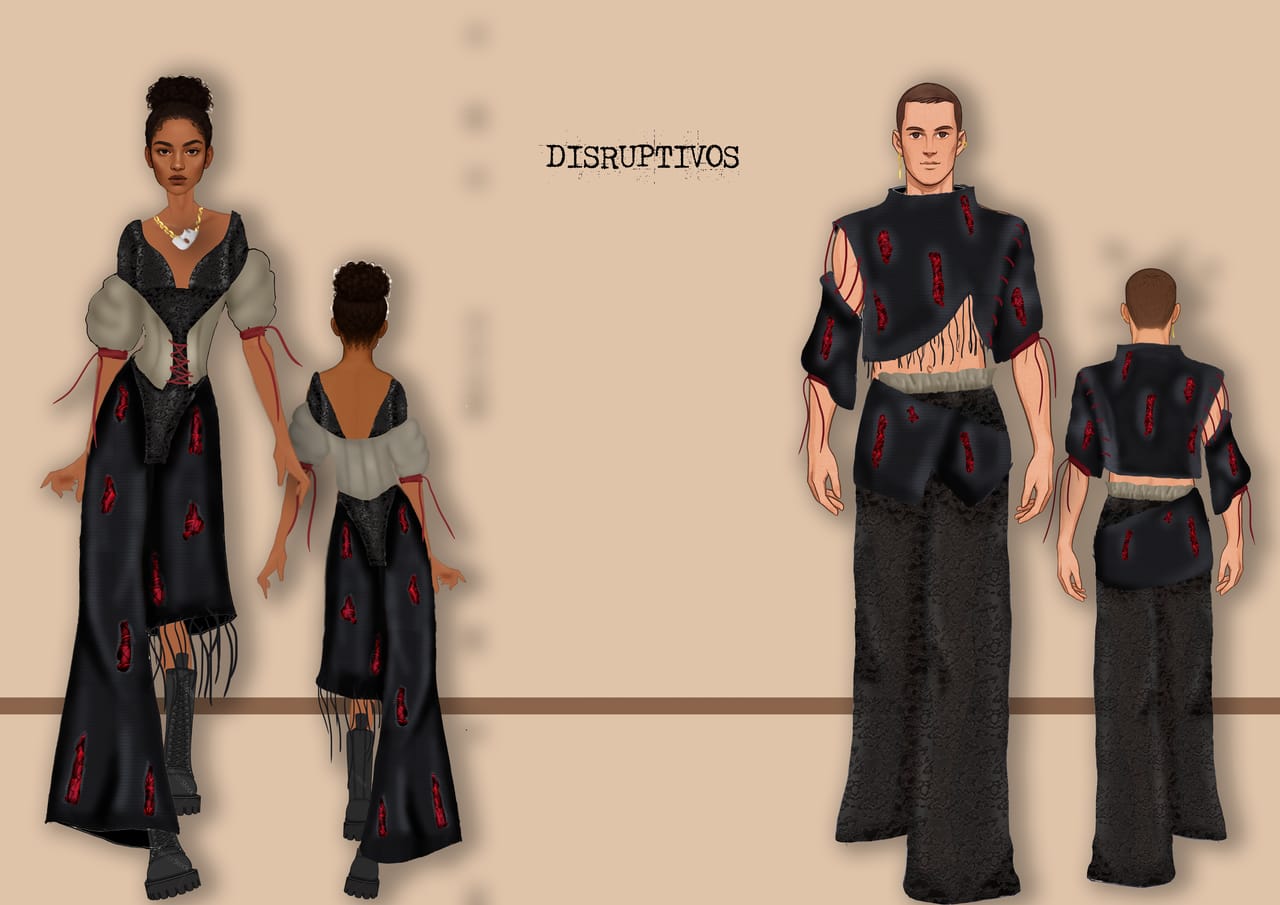
THE DISRUPTIVEROLE 04
This character is a contained explosion, one that creates disorder in order to reveal what lies beneath. These bodies do not adapt to structure; they disrupt, cut through and question it. Their identity is built through friction and movement, through the need to create openings in what is taken for granted.
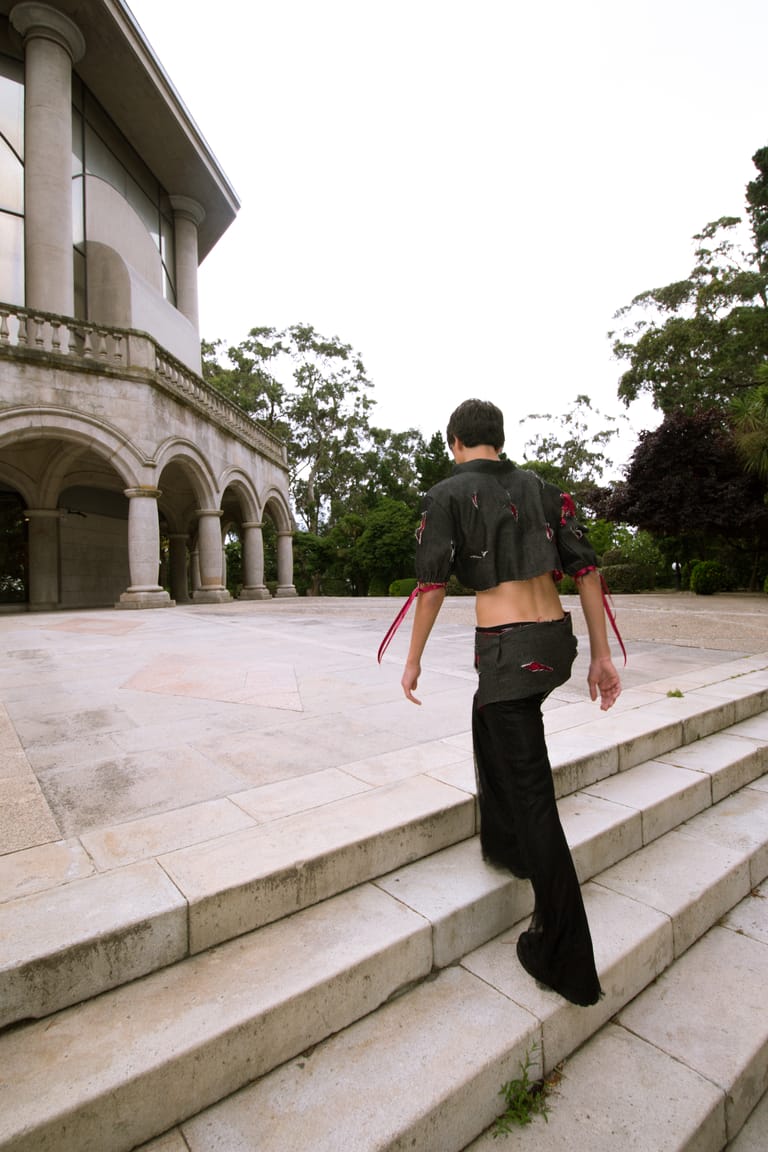
The design emerges from calculated rupture. Slashing, open cuts and diagonal lines create visual tension, like thoughts breaking beyond the established pattern. Raw edges expose the unfinished through loose threads, visible seams and layers that appear to detach from the body.
The volume itself refuses stability: weight shifts towards one shoulder, falls to one side or breaks at the hem, creating a sense of constant movement. Structured materials collide with transparencies that seem to escape the body, turning contrast and tension into the defining language of the character.
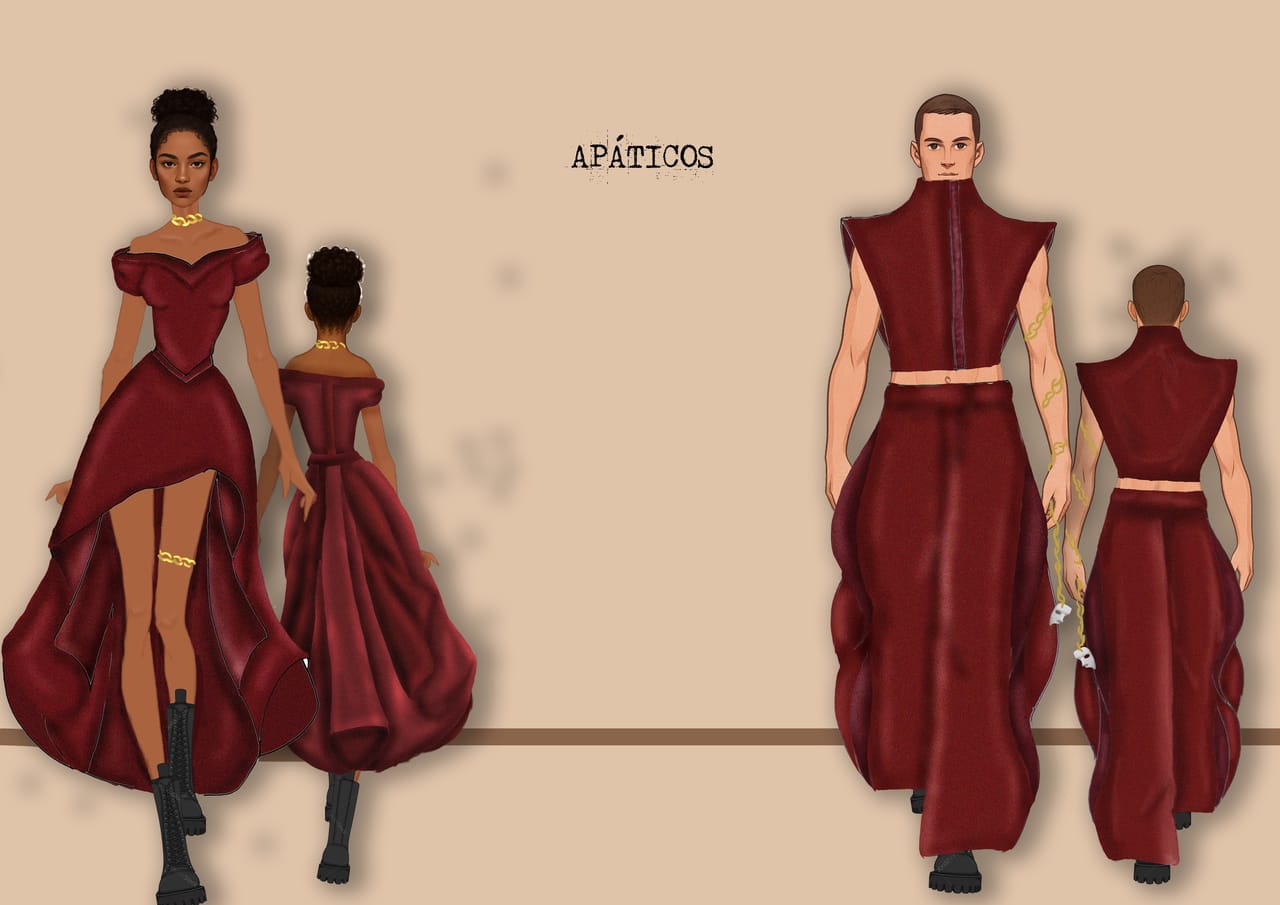
THE APATHETICROLE 05
This character does not emerge from indifference, but from exhaustion. They are the actor who continues the performance even when they have nothing left, moving forward because stopping is not an option. The body keeps going, but the story it carries becomes increasingly heavy. The theatricality lies in what is dragged along, everything accumulated, unspoken and never released.
The short front and elongated train of the dress create a visual metaphor of movement against weight. Velvet, with its dense texture and heavy drape, becomes an emotional curtain: dark, persistent and difficult to escape. Every fold suggests accumulated exhaustion, while every wrinkle becomes a memory that refuses to let go.
The result is a character defined by silent endurance, where the garment carries the emotional weight that the body can no longer express.
“Identity is not a single voice, but a set of characters living together on the same stage”
“Each character reveals a part of us and hides another”